


World
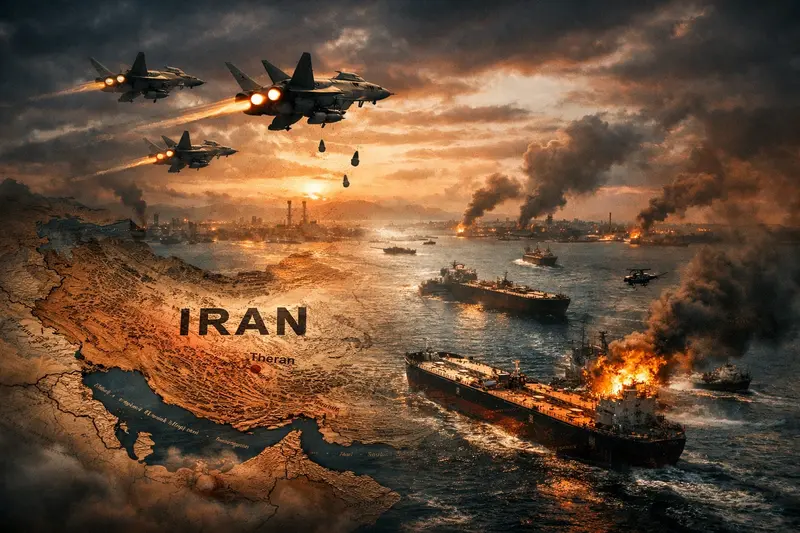
Why Iran Is Becoming Trump’s “Forever War” Amid Rising Global Tensions
Why Iran Is Becoming Trump’s “Forever War”
More than a month into the escalating conflict with Iran, Washington is now facing a situation it initially sought to avoid. What was expected to be a short and decisive military campaign has instead evolved into a prolonged and costly confrontation, raising serious questions about strategy, global stability, and political consequences.
From the beginning, the operation appeared designed to deliver a swift show of force. However, the reality on the ground has proven far more complex. The war, launched on February 28, has disrupted global energy markets, driven oil prices higher, and increased gasoline costs in the United States. At the same time, domestic political pressure is intensifying, with approval ratings declining as the economic impact becomes more visible to American households.
A War That’s Harder to Justify
Short military campaigns are often framed as strong leadership decisions. But when conflicts drag on, they become harder to defend politically. Rising costs, inflation, and uncertainty begin to overshadow initial objectives.
For Donald Trump, who built part of his political image on avoiding endless wars while maintaining strength abroad, the current situation presents a contradiction. The longer the conflict continues, the more it resembles the kind of prolonged engagement he once criticized. Without a clear and achievable end goal, the war risks becoming both a strategic and political burden.
Iran’s Strategy: Endurance Over Victory
Unlike traditional warfare, Iran’s approach does not rely on defeating the United States militarily. Instead, its strategy focuses on endurance and economic pressure.
By leveraging its geographic position—particularly around the Strait of Hormuz—Iran has the ability to influence global energy flows. Disruptions in this region can ripple across international markets, affecting oil supply and prices worldwide. This gives Tehran a powerful tool: it does not need outright military dominance to create significant consequences.
In this context, simply sustaining the conflict and preventing a clear resolution can be seen as a form of strategic success.
Failed Diplomacy and Deep Distrust
Efforts to mediate the conflict have so far failed to produce meaningful progress. Several regional actors, including Türkiye, Egypt, Pakistan, and Oman, have attempted to facilitate dialogue. However, deep-rooted distrust continues to block any breakthrough.
From Iran’s perspective, past events—particularly the U.S. withdrawal from the 2015 nuclear agreement—have undermined confidence in Washington’s commitments. This skepticism makes negotiations during an active conflict even more difficult.
Tehran appears unwilling to accept temporary arrangements that do not guarantee long-term stability, while also insisting on its own conditions for ending what it views as an unjust war.
Political Pressure Builds in Washington
Inside the United States, the conflict is becoming increasingly difficult to manage politically. Rising fuel prices and economic uncertainty are directly affecting public opinion.
At the same time, maintaining a strong stance while seeking a diplomatic exit creates a delicate balancing act. A settlement perceived as weak could damage political credibility, while a prolonged conflict continues to carry economic and strategic risks.
Strains Within Alliances
The war is also exposing fractures among Western allies. NATO members have shown reluctance to support a broader military campaign, emphasizing that the alliance was not designed for such operations.
Meanwhile, Gulf countries—despite being directly affected—are cautious about fully aligning with escalation efforts. With their infrastructure increasingly vulnerable to retaliation, these nations face significant risks without having initiated the conflict.
This lack of unified support complicates Washington’s ability to share both the burden and legitimacy of the war.
Escalation Without Clear Limits
As the conflict continues, attacks have expanded beyond purely military targets. Critical infrastructure, including energy facilities and transportation networks, has been affected on both sides.
This pattern reflects a dangerous cycle: each strike justifies another, making de-escalation increasingly difficult. Over time, the line between military and civilian impact becomes blurred, raising humanitarian concerns and deepening regional instability.
A Conflict With No Easy Exit
The longer the war continues, the harder it becomes to define what success looks like. Iran’s ability to endure and impose economic pressure contrasts with Washington’s need for a clear and presentable outcome.
Without a credible path toward resolution, the conflict risks becoming a “forever war”—a prolonged engagement with no clear endpoint, growing costs, and uncertain gains.
In this environment, voices advocating for diplomacy struggle to be heard, overshadowed by ongoing hostilities and mutual distrust. Until the underlying political issues are addressed, the prospect of a lasting resolution remains distant.
Tags:
What's your reaction?
0

AWESOME!
0

LOVED
0

NICE
0

LOL
0

FUNNY
0

EW!
0

OMG!
0

FAIL!
Popular News

Recent News
Comments
Leave a Reply